
Ultimate destination for technology lovers.
Showing posts with label Apple iPhone. Show all posts
Showing posts with label Apple iPhone. Show all posts
Tuesday, 18 December 2012
Apple reportedly in talks with Foursquare about data sharing

Monday, 17 December 2012
iPhone 5 opening weekend China sales top 2 million
Apple Inc sold more than 2 million of its new iPhone 5 in China during
the three days after its launch there on Friday,
Saturday, 15 December 2012
iPhone 5 hits China as Apple shares slide further
The highly anticipated release of the iPhone 5 in China, Apple Inc's
second-biggest market, failed to stop the recent share slide of the
world's most valuable technology company on Friday, and analysts said
Apple's longer-term China hopes may hinge on a partnership with the
country's top telecoms carrier.
Friday, 14 December 2012
Apple iPhone violated three Motorola patents: US jury
A U.S. jury on Thursday found that Apple's iPhone infringed three patents owned by holding company MobileMedia Ideas, though damages have not yet been determined.
Thursday, 13 December 2012
Apple outshines rivals amongst shoppers around the globe
Apple's stock may be sliding as investors fret about growing
competition, but store visits and interviews with smartphone and tablet
shoppers in 10 cities around the world suggest consumers share little of
that negativity.
Tuesday, 11 December 2012
Apple's Australia map glitch: Snakes! In the desert!
Australian police have warned travellers off using Apple's troubled
iPhone mapping software after several motorists became stuck in a
snake-infested, desert corner of the country while using their phone for
directions.
Monday, 10 December 2012
Apple Maps glitch could be deadly: Australian police
Australian police Monday warned motorists about using the map system on
new Apple iPhones after rescuing several people left stranded in the
wilderness, saying the errors could prove deadly.
Saturday, 8 December 2012
Apple's plunge skews mostly positive week on US markets

The showdown in Washington over the fiscal cliff gave US stocks another
volatile week, but the apparent political stalemate just weeks before a
potentially devastating fiscal crunch was not the defining market issue.
Apple's fall continues on Wall Street

This holiday season is shaping up to be a record-breaking period for
Apple as shoppers snap up iPhones and iPads. So, why is the world's most
valuable company losing its luster with investors?
Apple began
selling the iPhone 5 on Sept. 21, the same day the company's stock hit
an all-time peak of $705.07 per share. Since then, the stock has plunged
nearly 25 percent, trimming the company's market value by more than
$150 billion. On Friday, the stock fell almost 3 percent and closed at
$533.25.
Friday, 7 December 2012
Apple's softer side emerges under CEO Cook
"Those jobs aren't coming back."
 That's what Steve Jobs reportedly
told President Obama when asked at a dinner in early 2011 whether Apple
would consider moving some of its manufacturing from China to the United
States.
That's what Steve Jobs reportedly
told President Obama when asked at a dinner in early 2011 whether Apple
would consider moving some of its manufacturing from China to the United
States.Apple iPhone likely to be sold by T-Mobile in 2013
T-Mobile will likely start carrying the iPhone next year after its
parent company, Deutsche Telekom, said it has reached a new deal with
Apple.
 T-Mobile USA had been the lone iPhone-less carrier among the
four national wireless companies in the U.S. Although it has been
possible to use iPhones on T-Mobile networks, customers had to provide
the phones themselves. The phones also work at much slower speeds,
though T-Mobile has been reshuffling its network to match or exceed
AT&T's data speeds.
T-Mobile USA had been the lone iPhone-less carrier among the
four national wireless companies in the U.S. Although it has been
possible to use iPhones on T-Mobile networks, customers had to provide
the phones themselves. The phones also work at much slower speeds,
though T-Mobile has been reshuffling its network to match or exceed
AT&T's data speeds.
The three larger carriers, AT&T Inc., Verizon Wireless and Sprint Nextel Corp., already sell the iPhone, as do many smaller ones.
Deutsche Telekom AG said Thursday that T-Mobile will add Apple products to its portfolio in the coming year. Though it didn't mention the iPhone by name in its press release, that's the product it is most likely referring to. It's possible T-Mobile will also sell a cellular version of the iPad, as the three national carriers do.
Apple spokeswoman Natalie Harrison confirmed the agreement but would not comment further. In an email, T-Mobile also wouldn't mention the iPhone by name, saying only that more details will come "at a later date."
Having the iPhone would likely win T-Mobile more customers and help it keep up with rivals. But the upfront costs of carrying the device are high for phone companies. That's because carriers subsidize the iPhone when they sell it to customers, counting on making up the money in service fees over the life of a two-year contract. Last year, U.S. Cellular Corp., the country's sixth-largest cellphone company, said it turned down an opportunity to carry the iPhone, saying it's too expensive.
T-Mobile has agreed to combine its cellphone business with MetroPCS Communications Inc. in a deal they signed earlier this fall. The combined company will stay No. 4 among U.S. wireless carriers, though the combination is aimed at letting the two better compete with larger rivals. Deutsche Telekom will hold a 74 percent stake in the combined company. MetroPCS shareholders will own the rest. The deal awaits government clearance.
 T-Mobile USA had been the lone iPhone-less carrier among the
four national wireless companies in the U.S. Although it has been
possible to use iPhones on T-Mobile networks, customers had to provide
the phones themselves. The phones also work at much slower speeds,
though T-Mobile has been reshuffling its network to match or exceed
AT&T's data speeds.
T-Mobile USA had been the lone iPhone-less carrier among the
four national wireless companies in the U.S. Although it has been
possible to use iPhones on T-Mobile networks, customers had to provide
the phones themselves. The phones also work at much slower speeds,
though T-Mobile has been reshuffling its network to match or exceed
AT&T's data speeds.The three larger carriers, AT&T Inc., Verizon Wireless and Sprint Nextel Corp., already sell the iPhone, as do many smaller ones.
Deutsche Telekom AG said Thursday that T-Mobile will add Apple products to its portfolio in the coming year. Though it didn't mention the iPhone by name in its press release, that's the product it is most likely referring to. It's possible T-Mobile will also sell a cellular version of the iPad, as the three national carriers do.
Apple spokeswoman Natalie Harrison confirmed the agreement but would not comment further. In an email, T-Mobile also wouldn't mention the iPhone by name, saying only that more details will come "at a later date."
Having the iPhone would likely win T-Mobile more customers and help it keep up with rivals. But the upfront costs of carrying the device are high for phone companies. That's because carriers subsidize the iPhone when they sell it to customers, counting on making up the money in service fees over the life of a two-year contract. Last year, U.S. Cellular Corp., the country's sixth-largest cellphone company, said it turned down an opportunity to carry the iPhone, saying it's too expensive.
T-Mobile has agreed to combine its cellphone business with MetroPCS Communications Inc. in a deal they signed earlier this fall. The combined company will stay No. 4 among U.S. wireless carriers, though the combination is aimed at letting the two better compete with larger rivals. Deutsche Telekom will hold a 74 percent stake in the combined company. MetroPCS shareholders will own the rest. The deal awaits government clearance.
Thursday, 6 December 2012
First images of iPhone 5s spotted online
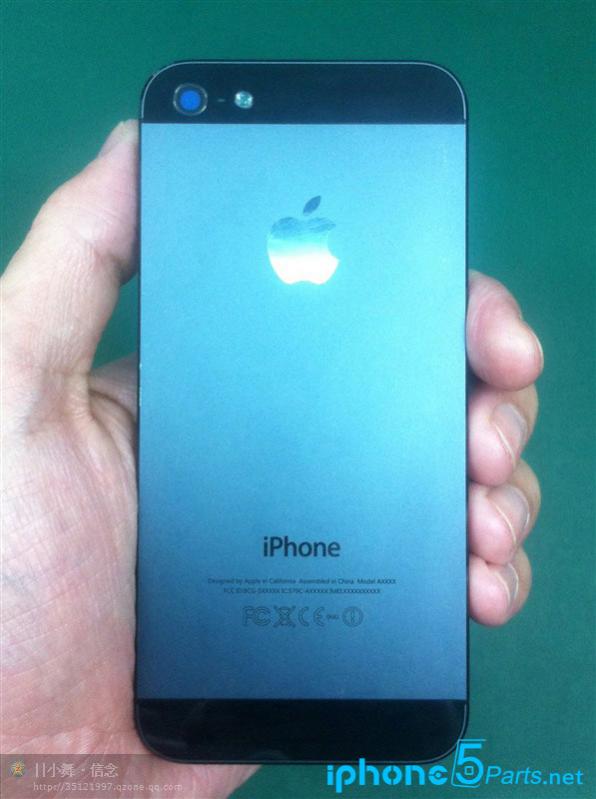
From the images, we can see that the screw placement on the upcoming model is a bit different from the iPhone 5 as well as some other minor changes can be noticed. However, in the side-by-side comparison of the two, we can see that the external design of the handset remains the same.
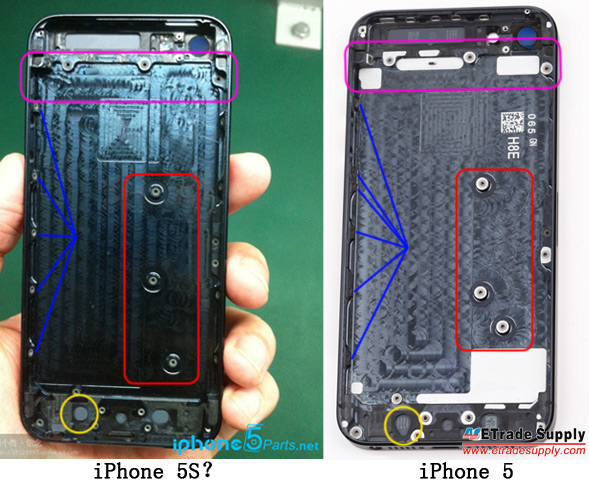 |
| The side-by-side comparison of the iPhone 5s and iPhone 5 |

Apple has a tradition of opting for similar designs with every alternate model, hence it may come as no surprise if they do decide to keep the external design the same. The brand did it with the iPhone 3GS and the iPhone 4S and from the looks of it, the iPhone 5S may not have any cosmetic improvements over its predecessor.
As of now, presumably there is still some time before the iPhone 5S gets launched and the iPhone 5 is still flying off the shelves. A couple of days ago news about the iPhone 5 being sold out and it being available in the grey market alone, started doing the rounds. To verify this further, we contacted a number of official Apple resellers such as Imagine, Reliance iStore and Maple and they all stated that as of now, the handset is, in fact, not in stock and the minimum waiting period for it is around 10 to 15 days. Currently they are only taking pre-bookings for the device. Those consumers who have pre-ordered the handset will be given priority over walk ins when the next batch of iPhones arrives.
We then contacted Apple India and they told us that multiple batches of iPhones had entered the market and they would continue to supply phones to resellers on a timely basis. They denied that the smartphone was not in stock.
As per their statement, units of the "acclaimed" iPhone 5 have been and currently are still flying off the shelves, hence the lack of supply. The bottom line sems to be that the reason the device could be out of stock in certain stores is because of the high level of demand for the handset. Stocks are running out quickly thanks to the handset's immense popularity. Apple's spokesperson also informed us that the only model that is difficult to purchase is the 64GB version as there were some supply constraints here in India.
In the grey market, units of the iPhone 5 have become available and the stores are selling the device at the same cost as the official resellers. However, only the 16GB and 32GB models appear to be in stock and as is the case with the official resellers, the 64GB variant is not available. However, if one does want a 64GB version, the waiting period is not as long i.e. around a week or so. At present in the grey market, the black variant of the handset is difficult to come by.
The Apple iPhone 5, which was launched on November 2, was sold out at official resellers'
stores on day one. It was reported that those interested in purchasing
the handset would have to wait for three to five weeks for the second
shipment to arrive.
Apple has teamed up with a couple of distribution channels, namely Redington and Ingram Micro to sell the iPhone 5 in India. Redington revealed the prices of the handset - the base model (16GB) is priced at Rs 45,500, the 32GB version will be available for Rs 52,500, and the 64GB model for Rs 59,500. These prices are more or less on par with the iPhone 4S from the previous generation, when it was first launched in India.
Apple shares register biggest fall in four years

Apple Inc. shares tumbled more than 6 percent on Wednesday, chalking up
their biggest single-day loss in four years as fears grow about
intensifying competition in the mobile device market.Investors and
analysts blamed the sell-off on a mix of factors, including a forecast
by an influential research firm that the iPad maker is continuing to
cede ground to rival Google Inc's Android gadgets, and unconfirmed
reports that at least one major stock-clearing house was raising margin
requirements on Apple stock trades.
Analysts also cited fears about a hike in the capital gains tax in 2013 in the event that ongoing Washington fiscal negotiations fail, as well as news that Nokia had beat Apple to the punch by striking a deal to sell its flagship Lumia through China Mobile, that country's largest wireless carrier.
Wednesday's drop rounded off a bleak 10 weeks for the most valuable U.S. company.
The stock was one of the day's biggest percentage losers on the S&P 500 , shedding $35 billion of market value as more than 37 million shares changed hands blowing past the company's average daily volume over 50 days of 21 million.
Apple's shares, once among the most desirable of portfolio holdings, have headed steadily lower since September on growing uncertainty about the company's ability to fend off unprecedented competition. This year saw a surge in sales of Amazon.com Inc's cheaper Kindle Fire and Microsoft Corp's first foray into the tablet market with its Surface.
Meanwhile, Samsung Electronics continues to chip away at the iPad's dominance with its Galaxy line.
The assault on Apple's consumer-electronics home turf presents a stiff challenge for CEO Tim Cook, who was elevated shortly before the death of Silicon Valley legend Steve Jobs and is now charged with keeping the world's largest technology company humming.
"This is not going to be a short-term trend. This is a management test, of how well they can perform without Steve Jobs," said Brian Battle, director of trading at Performance Trust Capital Partners in Chicago. Referring to Apple's new iPad mini, which is only a smaller version of the existing iPad, Battle said the company needs "another home run" for shares to return to levels around $700.
"They need another new product that hits it out of the park. Without that, they could get a gradual grind-down in confidence," he said.
On Wednesday, research firm International Data Corp said Apple most likely shed market share in the tablet computer space in 2012. Its worldwide tablet market share will slip to 53.8 percent in 2012 from 56.3 percent in 2011, while Android products would increase their share to 42.7 percent from 39.8 percent, IDC said.
Concerns that tax rates on dividends and capital gains may rise next year were also cited as contributing to the Apple sell-off.
The stock's massive market value meant Apple was almost single-handedly responsible for Wednesday's 1.1 percent decline in the Nasdaq 100 Index.
Apple is still up 33 percent this year, but is down nearly 24 percent from its record high of $705.07, hit on September 21. The stock slid more than 6.4 percent on Wednesday to close at $538.7923.
It is now gearing up for the introduction of its latest iPhone 5 and iPad mini in international markets. It will begin selling the iPhone 5 in 50 countries in December, including China and South Korea.
"Apple stock is significantly more volatile than its earnings and innovation stream," said Daniel Ernst, analyst with Hudson Square Research. "And yet the wind blows slightly from the south instead of the east one particular morning, and the stock is down 6 percent."
"It makes no sense. There are lines around the block for their products all around the world," he added. "No other company has that."
Separately, Nokia said it will partner with China Mobile, in a sales deal that will give the Finnish company an opportunity to win back Chinese market share from Apple's iPhone.
But some analysts continue to believe the dominant carrier in the world's largest cellular market will eventually embrace the iPhone as well.
"China Mobile already carries multiple smartphones from multiple vendors. We continue to expect China Mobile to add the iPhone in the back half of 2013," Piper Jaffray's Gene Munster wrote in a research note.
While lines for the latest iPad model appeared lighter than usual when it hit stores in November, Apple said at the time that demand was so strong that it "practically sold out of iPad minis." It sold 3 million of the new iPads including the full-sized version in the first three days on the market.
Some analysts suggested that investors also sold shares of Apple amid uncertainty over ongoing fiscal negotiations in Washington. If no agreement is reached on the issue, higher tax rates on dividends and capital gains are possible in 2013.
Investors who had hoped for a special dividend this year, as many other corporations have announced on expectations of higher tax rates next year, may be disappointed as time is running out.
"If you were expecting a special dividend by year end, that's less likely to happen because its December 5," said Colin Gillis, an analyst with BGC Partners.
The fear of higher taxes on capital gains also has prompted some investors to lock in profits now, particularly on a stock like Apple, which has posted gains of at least 25 percent for four consecutive years.
"Depending on what happens with the (U.S. fiscal negotiations), rates could rise next year or they could stay the same," said Battle, of Performance Trust Capital. "They will not be lower, so if you're an investor who has seen gains in Apple, it is better to take those gains this year rather than next."
Tax selling "can take a life of its own," said Tim Ghriskey, chief investment officer of Solaris Group in Bedford Hills, New York.
"Some taxable investors take the gains, that creates some negative momentum, institutional investors are heavily weighted the stock and reduce exposure."
Some market participants also cited reports by media including CNBC, which Reuters could not confirm, that margin requirements on the trading of Apple stock had been raised by at least one clearing firm.
Analysts also cited fears about a hike in the capital gains tax in 2013 in the event that ongoing Washington fiscal negotiations fail, as well as news that Nokia had beat Apple to the punch by striking a deal to sell its flagship Lumia through China Mobile, that country's largest wireless carrier.
Wednesday's drop rounded off a bleak 10 weeks for the most valuable U.S. company.
The stock was one of the day's biggest percentage losers on the S&P 500 , shedding $35 billion of market value as more than 37 million shares changed hands blowing past the company's average daily volume over 50 days of 21 million.
Apple's shares, once among the most desirable of portfolio holdings, have headed steadily lower since September on growing uncertainty about the company's ability to fend off unprecedented competition. This year saw a surge in sales of Amazon.com Inc's cheaper Kindle Fire and Microsoft Corp's first foray into the tablet market with its Surface.
Meanwhile, Samsung Electronics continues to chip away at the iPad's dominance with its Galaxy line.
The assault on Apple's consumer-electronics home turf presents a stiff challenge for CEO Tim Cook, who was elevated shortly before the death of Silicon Valley legend Steve Jobs and is now charged with keeping the world's largest technology company humming.
"This is not going to be a short-term trend. This is a management test, of how well they can perform without Steve Jobs," said Brian Battle, director of trading at Performance Trust Capital Partners in Chicago. Referring to Apple's new iPad mini, which is only a smaller version of the existing iPad, Battle said the company needs "another home run" for shares to return to levels around $700.
"They need another new product that hits it out of the park. Without that, they could get a gradual grind-down in confidence," he said.
On Wednesday, research firm International Data Corp said Apple most likely shed market share in the tablet computer space in 2012. Its worldwide tablet market share will slip to 53.8 percent in 2012 from 56.3 percent in 2011, while Android products would increase their share to 42.7 percent from 39.8 percent, IDC said.
Concerns that tax rates on dividends and capital gains may rise next year were also cited as contributing to the Apple sell-off.
The stock's massive market value meant Apple was almost single-handedly responsible for Wednesday's 1.1 percent decline in the Nasdaq 100 Index.
Apple is still up 33 percent this year, but is down nearly 24 percent from its record high of $705.07, hit on September 21. The stock slid more than 6.4 percent on Wednesday to close at $538.7923.
Befuddling slide
Some analysts were perplexed at the fall from favor in Apple stock, which has been a staple in almost all growth portfolios. The company is expected to deliver reliably high revenue and earnings expansion for years to come, and one in two tablets sold globally remains an iPad.It is now gearing up for the introduction of its latest iPhone 5 and iPad mini in international markets. It will begin selling the iPhone 5 in 50 countries in December, including China and South Korea.
"Apple stock is significantly more volatile than its earnings and innovation stream," said Daniel Ernst, analyst with Hudson Square Research. "And yet the wind blows slightly from the south instead of the east one particular morning, and the stock is down 6 percent."
"It makes no sense. There are lines around the block for their products all around the world," he added. "No other company has that."
Separately, Nokia said it will partner with China Mobile, in a sales deal that will give the Finnish company an opportunity to win back Chinese market share from Apple's iPhone.
But some analysts continue to believe the dominant carrier in the world's largest cellular market will eventually embrace the iPhone as well.
"China Mobile already carries multiple smartphones from multiple vendors. We continue to expect China Mobile to add the iPhone in the back half of 2013," Piper Jaffray's Gene Munster wrote in a research note.
While lines for the latest iPad model appeared lighter than usual when it hit stores in November, Apple said at the time that demand was so strong that it "practically sold out of iPad minis." It sold 3 million of the new iPads including the full-sized version in the first three days on the market.
Some analysts suggested that investors also sold shares of Apple amid uncertainty over ongoing fiscal negotiations in Washington. If no agreement is reached on the issue, higher tax rates on dividends and capital gains are possible in 2013.
Investors who had hoped for a special dividend this year, as many other corporations have announced on expectations of higher tax rates next year, may be disappointed as time is running out.
"If you were expecting a special dividend by year end, that's less likely to happen because its December 5," said Colin Gillis, an analyst with BGC Partners.
The fear of higher taxes on capital gains also has prompted some investors to lock in profits now, particularly on a stock like Apple, which has posted gains of at least 25 percent for four consecutive years.
"Depending on what happens with the (U.S. fiscal negotiations), rates could rise next year or they could stay the same," said Battle, of Performance Trust Capital. "They will not be lower, so if you're an investor who has seen gains in Apple, it is better to take those gains this year rather than next."
Tax selling "can take a life of its own," said Tim Ghriskey, chief investment officer of Solaris Group in Bedford Hills, New York.
"Some taxable investors take the gains, that creates some negative momentum, institutional investors are heavily weighted the stock and reduce exposure."
Some market participants also cited reports by media including CNBC, which Reuters could not confirm, that margin requirements on the trading of Apple stock had been raised by at least one clearing firm.
Subscribe to:
Comments (Atom)