
Ultimate destination for technology lovers.
Showing posts with label mobile. Show all posts
Showing posts with label mobile. Show all posts
Friday, 14 December 2012

Samsung Galaxy Note III rumoured to have a monster 6.3-inch display
The
bigger the better seems to be the new mantra of mobile phone makers.
Samsung stretched the mobile screens to 5.3-inch with the introduction
of its Galaxy Note device and 5.5-inch with the Galaxy Note II. Now, the
company seems to be aiming even higher.
Tuesday, 11 December 2012
Mobile video calling creates a new frontier
As
the cameras and screens of smartphones and tablets improve, and as
wireless networks offer higher bandwidth, more companies are getting
into the business of enabling mobile video calls.
Monday, 10 December 2012
Light can drive faster computing in future
Cell phones and laptops, powered by increasingly faster and tinier processors, are becoming sleeker and lighter.
Contact lens that can receive your text messages
 Scientists have developed a new technology that allows electronic
messages sent from mobile phones to be directly projected on to contact
lens placed in the recipient's eyes.
Thursday, 6 December 2012
New Galaxy phone may have unbreakable screen

Samsung Electronics, the world's leading technology
company by revenue, is likely accelerating the launch of its
next-generation flagship Galaxy smartphone - which may come with a
breakthrough unbreakable screen.Codenamed "Project J" after mobile
division chief JK Shin, development of the new Galaxy S IV could be
aimed for release by as early as April, according to analysts and tech
blogs.
And, as smartphones increasingly look alike - the converging form factor - an unbreakable screen could be a big selling point for the Galaxy, which is battling Apple Inc's iPhone to lead the $200 billion plus smartphone market.
The Galaxy S IV is also expected to have bigger and better display, powerful quad-core processing power and a 13-megapixel camera, with picture density improving to 441 pixels per inch (ppi), a big improvement from the Galaxy S III's 306 ppi and better than the iPhone 5's 326 ppi.
"Looking to the first half of 2013, we see evidence of Samsung likely accelerating the release of the Galaxy S IV - compared with May (this year) for the Galaxy S III," said UBS analyst Nicolas Gaudois. "We believe preparations for volume manufacturing of unbreakable plastic substrate displays continue. All in all, we could see a strong products push in the high-end in the first half, followed by other releases."
Samsung declined to comment.
Samsung, a major backer of organic light-emitting diode (OLED) display, is a frontrunner in developing unbreakable screens, as OLED panels can replace glass substrate with plastic material. Down the road, mobile gadgets could be flexible as well as unbreakable.
"Eventually, they'll have unbreakable and flexible displays. Either the Galaxy S IV or S V will have unbreakable and even possibly flexible and foldable displays by 2014. That's going to be a game-changer," said Mark Newman, an analyst at Stanford Bernstein in Hong Kong.
Both Newman and Gaudois are ranked as 5-star analysts, the top ranking, by Thomson Reuters StarMine for their recommendations on Samsung.
The South Korean consumer electronics giant faces off against Apple again on Thursday in a U.S. courtroom for a follow-up ruling on whether it copied some of its U.S. rival's patents and should pay the $1 billion awarded to Apple by jurors in an August verdict.
Samsung wants the verdict overturned, while Apple wants the damages to be increased and Samsung phones banned in the United States.
Since that landmark verdict, however, Samsung shares have gained 14 percent to record highs, while Apple shares - dented by a maps app fiasco, tight supply of its iPhone 5 and ever tougher competition in the mobile market - have slipped by nearly a fifth, wiping more than $120 billion off its market value.
Barring any extra costs related to the U.S. ruling, Samsung should report a fifth straight record profit this quarter, as profits from its component business recover and more than offset thinning margins on mobile phones - squeezed by higher year-end holiday marketing campaigns.
"Samsung's strength extends beyond cool products, they're also a leader in the technology behind these devices. We see further upside to Samsung's stock as success in smartphones continues and chips and display profits also rebound," said Newman. "In smartphones, the opportunity is for Samsung to take more share from Apple in the premium segment, where Apple is still dominant."
UBS estimates Samsung will ship around 22.5 million of its Galaxy S III and Note II devices in the quarter to end-December, up from 20 million in July-September. Shin said in November that Galaxy S III sales would hit 40 million by the end of this month.
In a worst-case scenario for Samsung, U.S. judge Lucy Koh could treble the damages payable to Apple, given the jury in August found Samsung "wilfully" infringed some Apple patents.
"That would be a major blow to Samsung's fundamentals and overall investor sentiment, but it's not the most likely scenario," said Young Park, a 4-star StarMine analyst at Woori Investment & Securities.
And, as smartphones increasingly look alike - the converging form factor - an unbreakable screen could be a big selling point for the Galaxy, which is battling Apple Inc's iPhone to lead the $200 billion plus smartphone market.
The Galaxy S IV is also expected to have bigger and better display, powerful quad-core processing power and a 13-megapixel camera, with picture density improving to 441 pixels per inch (ppi), a big improvement from the Galaxy S III's 306 ppi and better than the iPhone 5's 326 ppi.
"Looking to the first half of 2013, we see evidence of Samsung likely accelerating the release of the Galaxy S IV - compared with May (this year) for the Galaxy S III," said UBS analyst Nicolas Gaudois. "We believe preparations for volume manufacturing of unbreakable plastic substrate displays continue. All in all, we could see a strong products push in the high-end in the first half, followed by other releases."
Samsung declined to comment.
Samsung, a major backer of organic light-emitting diode (OLED) display, is a frontrunner in developing unbreakable screens, as OLED panels can replace glass substrate with plastic material. Down the road, mobile gadgets could be flexible as well as unbreakable.
"Eventually, they'll have unbreakable and flexible displays. Either the Galaxy S IV or S V will have unbreakable and even possibly flexible and foldable displays by 2014. That's going to be a game-changer," said Mark Newman, an analyst at Stanford Bernstein in Hong Kong.
Both Newman and Gaudois are ranked as 5-star analysts, the top ranking, by Thomson Reuters StarMine for their recommendations on Samsung.
Courtroom revisited
It would also be a game-changer for Samsung, which has built its reputation as a 'fast follower' of others' technologies and designs.The South Korean consumer electronics giant faces off against Apple again on Thursday in a U.S. courtroom for a follow-up ruling on whether it copied some of its U.S. rival's patents and should pay the $1 billion awarded to Apple by jurors in an August verdict.
Samsung wants the verdict overturned, while Apple wants the damages to be increased and Samsung phones banned in the United States.
Since that landmark verdict, however, Samsung shares have gained 14 percent to record highs, while Apple shares - dented by a maps app fiasco, tight supply of its iPhone 5 and ever tougher competition in the mobile market - have slipped by nearly a fifth, wiping more than $120 billion off its market value.
Barring any extra costs related to the U.S. ruling, Samsung should report a fifth straight record profit this quarter, as profits from its component business recover and more than offset thinning margins on mobile phones - squeezed by higher year-end holiday marketing campaigns.
"Samsung's strength extends beyond cool products, they're also a leader in the technology behind these devices. We see further upside to Samsung's stock as success in smartphones continues and chips and display profits also rebound," said Newman. "In smartphones, the opportunity is for Samsung to take more share from Apple in the premium segment, where Apple is still dominant."
UBS estimates Samsung will ship around 22.5 million of its Galaxy S III and Note II devices in the quarter to end-December, up from 20 million in July-September. Shin said in November that Galaxy S III sales would hit 40 million by the end of this month.
In a worst-case scenario for Samsung, U.S. judge Lucy Koh could treble the damages payable to Apple, given the jury in August found Samsung "wilfully" infringed some Apple patents.
"That would be a major blow to Samsung's fundamentals and overall investor sentiment, but it's not the most likely scenario," said Young Park, a 4-star StarMine analyst at Woori Investment & Securities.
Wednesday, 5 December 2012
Sony announces Xperia E and Xperia E-dual smartphones with Android 4.1
Sony has announced a new budget Android smartphone - Sony Xperia E.
 The
Sony Xperia E sports a 3.5-inch HVGA touchscreen and single-core 1GHz
Qualcomm Snapdragon MSM7227A processor, 512MB of RAM, 4GB of internal
storage and 1,500 mAh battery that can provide a talk time of up to 6.3
hours, or a stand-by time of up to 530 hours. The storage can be
expanded to up to 32 GB via microSD card. The smartphone also has a
3.2-megapixel rear camera with auto-focus.
Sony revealed that a dual-SIM (GSM+GSM) version of this smartphone, called Xperia E dual, will also be made available. Sony Xperia E will run on Android 4.1 Jelly Bean but the Xperia E dual will come pre-loaded with Android 4.0 Ice Cream Sandwich, and will be upgradable to Android 4.1.
Another difference between the two smartphones is that Sony Xperia E will be available in black, white and pink colours while the Xperia E Dual will be seen only in black and gold.
According to Sony the differentiating factor for these smartphones will be HD Voice, which makes phone calls clearer than ever before and its noise cancellation feature that filters out background noise.
"Consumers looking to take their first steps into the world of Xperia smartphones would be well advised to look at Xperia E or Xperia E dual. They are perfect for those seeking affordable access to the quality and functionality more traditionally associated with high-end Android smartphones," said Calum MacDougall, Director Xperia Marketing at Sony Mobile Communications.
As of now Sony has given no indication on the pricing of this smartphone but has shared that it will be available in Q1 2013.
Sony Xperia E seems to be much on the lines of recently launched Sony Xperia tipo and Xperia tipo dual smartphones. Xperia tipo dual is dual-SIM (GSM+GSM) version of Xperia tipo, which is available in India for Rs. 10,449.
Both Sony Xperia tipo and Xperia tipo dual smartphones sport a 3.2-inch TFT display with 480x320 pixel resolution and run on Android 4.0. There is 800MHz Qualcomm Snapdragon processor on-board along with 512MB of RAM. The smartphones come with 2.5GB internal storage and can be expanded up to 32 GB via microSD. Sony has tied up with Box to offer 50GB of cloud storage for life with the purchase of these Xperia smartphones.
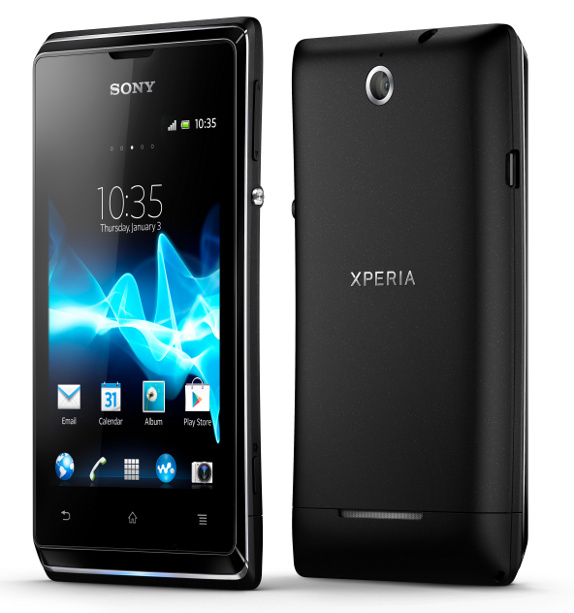
Sony revealed that a dual-SIM (GSM+GSM) version of this smartphone, called Xperia E dual, will also be made available. Sony Xperia E will run on Android 4.1 Jelly Bean but the Xperia E dual will come pre-loaded with Android 4.0 Ice Cream Sandwich, and will be upgradable to Android 4.1.
Another difference between the two smartphones is that Sony Xperia E will be available in black, white and pink colours while the Xperia E Dual will be seen only in black and gold.
According to Sony the differentiating factor for these smartphones will be HD Voice, which makes phone calls clearer than ever before and its noise cancellation feature that filters out background noise.
"Consumers looking to take their first steps into the world of Xperia smartphones would be well advised to look at Xperia E or Xperia E dual. They are perfect for those seeking affordable access to the quality and functionality more traditionally associated with high-end Android smartphones," said Calum MacDougall, Director Xperia Marketing at Sony Mobile Communications.
As of now Sony has given no indication on the pricing of this smartphone but has shared that it will be available in Q1 2013.
Sony Xperia E seems to be much on the lines of recently launched Sony Xperia tipo and Xperia tipo dual smartphones. Xperia tipo dual is dual-SIM (GSM+GSM) version of Xperia tipo, which is available in India for Rs. 10,449.
Both Sony Xperia tipo and Xperia tipo dual smartphones sport a 3.2-inch TFT display with 480x320 pixel resolution and run on Android 4.0. There is 800MHz Qualcomm Snapdragon processor on-board along with 512MB of RAM. The smartphones come with 2.5GB internal storage and can be expanded up to 32 GB via microSD. Sony has tied up with Box to offer 50GB of cloud storage for life with the purchase of these Xperia smartphones.
Key features of Sony Xperia E and E dual
- 3.5-inch (480 x 320 pixels) TFT capacitive touch screen display
- Dual-SIM (GSM+GSM) (Xperia E dual only)
- Xperia E - Android 4.1 (Jelly Bean); Xperia E dual - Android 4.0 (Ice Cream Sandwich)
- 1GHz Qualcomm Snapdragon MSM7227A processor
- 512MB RAM, 4GB internal memory, up to 32GB expandable memory with microSD
- 3.2-megapixel rear camera
- 3.5 mm audio jack, FM Radio with RDS
- 3G, Bluetooth, WiFi b/g/n, DLNA, GPS / aGPS
- 1500 mAh battery
- 11 mm thick and weighs 115.7 g
DoT to run trials of technology to locate lost phones
 Government is likely to launch a pilot project to test a new technology
that helps locate lost or cloned mobile phones on real time basis.The
Department of Telecom (DoT) plans to use the technology developed by
Telecordia to locate mobile phones in real time, sources said.
Telecom Secretary R Chandrashekhar has asked DoT officials to work on the proposal made by MNP Interconnection Telecom Solution, one of the companies that is working on mobile number portability scheme, of deploying Central Device Information Registry (CDIR).
The technology seems "worthwhile" to top DoT officials and the Secretary is of the view that trials can be conducted at no cost to the government to assess the utility of the proposal, sources said.
The CDIR developed by Telecordia, stakeholder in MNP Interconnection, consolidates real-time and non-real time to address traditional mobile device challenges such as mobile theft, invalid device blocking, counterfeiting and cloning detection.
Before starting trial of
this service, DoT is working to put proper conditions so that there is
no misuse of data and information collected by MITS during trial.
Samsung Galaxy S IV codenamed 'Project J', may launch April 2013
 Prominent Samsung-related blog SamMobile has the latest on Samsung Galaxy S IV rumours.
According to the blog the next generation Galaxy S device, likely to be called Samsung Galaxy S IV, is under development and is codenamed 'Project J' and may launch as early as April 2013.
Earlier rumours have indicated that the Samsung Galaxy S IV will have a 4.99-inch Super AMOLED display with 1920*1080 resolution, giving it a pixel density of 441PPI. That report is in line with other rumours which suggested that Samsung and LG are working on smartphones with full-HD display, which may be released in first-half of 2013. It would make sense for Samsung's next flagship device to be its first smartphones with full-HD display."Samsung is having plans to announce the next Galaxy S in April.According to older rumors the Galaxy S IV would have a full HD AMOLED display, a quad-core cpu,the latest version of android, a 13 megapixel camera and the screen size would be 5.0"Our insider could not confirm the specifications at this moment! He only knows the new project name called: Project J for the next Galaxy."
Galaxy S IV Rumoured Specs


Other rumours had indicated the Galaxy S IV will feature a 13-megapixel camera, a significant upgrade over the Galaxy S III's 8-megapixel rear shooter. There's also buzz about the Galaxy S IV featuring a 2 GHz quad-core Exynos processor and an 8-core GPU.
Tuesday, 4 December 2012
Kerala sets up seaside village to nurture software startups

His message is directed at aspiring entrepreneurs at Startup Village, a state-of-the-art glass and steel edifice tucked in a green corner of the port city, who dream of creating the next billion-dollar tech giant.
But even three decades after Infosys, India's second-largest software service provider, was founded by middle-class engineers, the country has failed to create an enabling environment for first-generation entrepreneurs.
Startup Village wants to break the logjam by helping engineers develop 1,000 Internet and mobile companies in the next 10 years. It provides its members with office space, guidance and a chance to hobnob with the stars of the tech industry, including Gopalakrishnan, the project's chief mentor.
But critics say this may not even be the beginning of a game-changer unless India deals with a host of other impediments from red tape to a lack of innovation and a dearth of investors that are blocking entrepreneurship in Asia's third-largest economy.
India ranks 74th out of 79 nations in the Global Entrepreneurship and Development Index, making it one of the worst places in the world to start a business.
A World Bank report says it is easier to start a business in violence-afflicted Pakistan or poverty-stricken Nepal than in their giant neighbour, where everything from getting electricity to credit is time-consuming and fraught with paperwork.
"Take Apple or take Google. If exactly the same company had been started in India, its prospects would have been very different," said Erkko Autio, chair in technology venturing and entrepreneurship at Imperial College, London. "Basically, it would have not reached the potential it has as a start-up."
Indian-born entrepreneurs have been enormously successful in the United States, where they have the highest number of tech-start-ups by any immigrant group. But India has not been able to build itself a community like Silicon Valley where there is easy access to equity, a pool of creative talent and first-world infrastructure.
"We were alone. We had no idea how to make a company, how to sell it. We tried, failed, tried, failed," said Kallidil Kalidasan, a 23-year-old member who started a mobile app venture in Kerala two years ago and could not find a single investor.
He is now one of the entrepreneurs at Startup Village, and is working on a product that could help the government detect illegal abortions in a country plagued by female foeticide.
Bare necessities
The seven-month-old Startup Village provides would-be entrepreneurs with workspace at rents about a tenth of anywhere else in Kochi, computers, a high-speed Internet connection, legal and intellectual property services and access to high-profile investors.The village is still to be completed, but 68 people, would-be entrepreneurs and their teams, have already taken up two buildings at the site.
Spread over 100,000 sq ft (9,250 sq m) - equivalent to 20 basketball courts - Startup Village will be completed in 2014. India has 120 other incubators, but they are mostly housed in academic institutions and have not drawn a strong network of advisers from the private sector.
Startup Village, the first such institution to be jointly funded by the government and private sector, has Gopalakrishnan as its chief promoter and has collaborations with companies such as BlackBerry maker Research in Motion and IBM.
"One, the goal of this initiative is to create new companies and create jobs. Second, this will create new solutions and products," Gopalakrishnan told Reuters in an e-mail interview.
He is excited about creating an ecosystem for entrepreneurs in his home-state, Kerala, which is famous for its tropical coastline and backwaters. The Village team says it chose Kerala because costs are lower than New Delhi or Mumbai and it has 150 engineering colleges that can provide start-up enthusiasts.
But for some, Startup Village will not work because it does not provide the right environment for a budding tech start-up.
"What does an entrepreneur need besides money? They need strong support in terms of advice," said Mukund Mohan, who has founded and sold three Silicon Valley start-ups and is CEO-in-residence at the Microsoft Accelerator. The institution helps start-ups in Bangalore, the city most associated with India's software industry that is about 550 km (340 miles) north of Kochi.
"There are not that many entrepreneurs in India, and there are hardly any in Kerala who have the expertise to be able to build, scale and sell strong software companies," said Mohan. "If you have not been there and done that before, what advice will you give?"
But Bangalore has not been able to nurture a start-up culture of any significance either. It has many aspiring CEOs and optimistic financiers, but they are also struggling with a maze of regulations and half-hearted government support.
Lack of ingenuity
The newer start-ups in Bangalore or Kerala are eying products not services. Many bring ideas catering to the booming market of domestic online shoppers, like Flipkart, the nation's most heavily financed e-commerce company. But financial backers for such ventures are few and far between."We are a fixed-deposit country," said Rajesh Sawhney, founder of GSF Superangels that provides angel and seed funding to start-ups. "Our investors are risk-averse. They don't trust young people with their money."
Fewer than 150 start-ups are promoted by venture capital or angel investors annually in India. There are over 60,000 angel investments, made in the early stages of a start-up, alone per year in the United States, according to an Indian government report.
Experts believe India is handicapped by a lack of ingenuity. It ranks 64th on the Global Innovation Index, much below other BRICS nations. Indian graduates, largely trained in services, have difficulty innovating beyond that approach.
Barely 700 technology product startups are launched every year in India versus over 14,000 in the United States, according to the Microsoft Accelerator database.
For India's risk-averse middle-class, entrepreneurship is the last recourse of the unemployed.
"If you go to a function, and someone asks you where you are working, and if you don't say Infosys or Wipro, they say: 'Oh you did not get placement (for a job)'," said Startup Village member Sreekumar Ravi.
Ravi is working on creating an affordable multi-touch computing surface that could change the way people window shop in malls or place orders in restaurants.
Startup Village aims to pluck innovators from college campuses, and bring them into the fold after evaluating their business ideas. Many of its in-house entrepreneurs are in their mid-twenties.
But critics are sceptical if Startup Village would be able to launch the next Infosys in India or even be successful in its goal of incubating 1,000 online companies.
"I will be thrilled if they do even a quarter of that number. But do I think they will do more than 100? No." said Mohan from Microsoft Accelarator. "I mean I hope they succeed. But hope is not a strategy, hope is only a prayer."
© Thomson Reuters 2012
LG launches Optimus L9 with Android 4.0 for Rs. 23,000
LG has officially launched its Optimus L9 in India for Rs. 23,000. Last
week, we had reported that this smartphone was up for pre-orders for Rs. 19,990.
 LG
Optimus L9 comes with 1GHz dual-core processor and 4.7-inch IPS
display. It has a qHD (960x540 pixels) display and runs on Android 4.0
(Ice Cream Sandwich). The smartphone also comes with 1GB RAM,
5-megapixel rear camera and high-density 2150 mAH SiO+ battery.
While Optimus L9 does come with premium design elements that were taken from Prada Phone for LG, the main focus seems to be on the software part. LG has bundled QTranslator, MY Style Keypad and QMemo apps on the smartphone.
Apart from LG Optimus L9, the Optimus L-Series of smartphones includes the Optimus L7, L5, and L3.
LG
Optimus L9 comes with 1GHz dual-core processor and 4.7-inch IPS
display. It has a qHD (960x540 pixels) display and runs on Android 4.0
(Ice Cream Sandwich). The smartphone also comes with 1GB RAM,
5-megapixel rear camera and high-density 2150 mAH SiO+ battery.While Optimus L9 does come with premium design elements that were taken from Prada Phone for LG, the main focus seems to be on the software part. LG has bundled QTranslator, MY Style Keypad and QMemo apps on the smartphone.
Apart from LG Optimus L9, the Optimus L-Series of smartphones includes the Optimus L7, L5, and L3.
Key specs for LG Optimus L9
- Android 4.0 Ice Cream Sandwich
- 1GHz Dual-Core
- 4.7-inch IPS Display
- 1GB DDR2 (RAM) / 4GB e-MMC
- 5MP rear / VGA front
- 2150mAh SiO+ batttery
- 131.9 x 68.2 x 9.1mm / 125g
- DLNA
Subscribe to:
Posts (Atom)